

You know the moment. You're watching something with your kid, a cartoon, a learning app, a YouTube video and they go quiet. Not the quiet of concentration. The quiet of searching.
They're looking for themselves. In the characters. In the faces. In the stories.
And they're not finding it.
The child with a prosthetic leg scanning every hero for someone who moves like them. The autistic kid waiting for a character who stims without being the punchline. The girl in rural Ghana whose entire culture has been reduced to a single "African" accent in a two-minute segment about animals.
They don't say anything. They don't have the language for it yet. But the message they receive is loud and forensically clear: this world wasn't built for you.
And before you dismiss this as soft politics or "woke" overthinking, this has clinical consequences.
Mirrors and Windows
In 1990, a professor called Rudine Sims Bishop gave us a framework that the children's media industry has been citing for thirty-five years and ignoring for exactly the same amount of time.
She called it "Mirrors and Windows."
A Mirror is a piece of media where a child sees themselves reflected, their culture, their body, their family structure, their way of being in the world. Mirrors build identity. They tell a child: you exist. You matter. Your story is worth telling.
A Window is a piece of media where a child sees into a life that isn't theirs, a different country, a different ability, a different language at the dinner table. Windows build empathy. They tell a child: the world is bigger than your bedroom, and every version of it is real.
The best media does both simultaneously. A child in Lagos sees herself in a hero who looks like her (Mirror) while also learning about a child in Leeds whose brain works differently (Window). A child in a wheelchair in Kyoto watches a character navigate the world with a prosthetic leg and thinks: "That's like me", while a child in Melbourne watches the same character and thinks: "I understand now."
The theory is thirty-five years old. The execution is still almost non-existent.
The 2026 Representation Crisis
Here's what the children's media landscape actually looks like right now.
The Token Problem. Most "diverse" content operates on a quota model. One character in a wheelchair. One character with brown skin. One character who speaks a different language. They're placed carefully in the background, given three lines of dialogue, and used as proof of inclusion in the brand's ESG report. The child isn't represented. They're displayed. There's a difference.
The Costume Problem. When diversity does make it to the foreground, it's usually cosmetic. A character's difference is their entire personality. The child with autism is "the quirky one." The child with a limb difference is defined by "overcoming" their body. The child from a low-income background exists to be rescued. These aren't mirrors. They're caricatures wearing the child's face.
The Access Problem. Even when representation is done well in the story, the product itself excludes. The diverse characters live inside apps that require expensive devices, stable broadband, and monthly subscriptions. The child in rural Volta Region who most needs to see herself in a hero can't access the platform that hero lives on. Representation without access is a billboard for a shop that's locked.
The Data Problem. This is the one that should terrify every institutional buyer reading this. Most children's platforms cannot tell you, with any forensic accuracy, whether their "diverse" content is actually reaching diverse children. They can tell you how many kids watched the episode. They cannot tell you whether the child who needed that Mirror actually found it. Engagement metrics are not inclusion metrics. Downloads are not dignity.
Take Jabari. Take Sophie. Take Ama.
Jabari is nine. Nairobi, Kenya. Born with a limb difference. He's sharp, loves conservation, dreams of working with wildlife. Every hero he sees on screen has two arms and two legs. Every single one. He's learned to project himself onto characters who don't look like him because the industry decided his body wasn't worth animating.
Sophie is seven. Leeds, England. Autistic. She thinks in pictures. She processes the world through visual sequences and routines. Every "educational" app she uses rewards speed, verbal fluency, and social performance; the exact things her neurology doesn't prioritise. The apps aren't just failing to mirror her. They're actively telling her she's doing it wrong.
Ama is eight. Rural Volta Region, Ghana. She's the village storyteller, the kid who preserves elder wisdom through narrative. Her entire cultural framework, Ewe values of community, oral tradition, resource stewardship, doesn't exist in a single piece of mainstream children's media. She has no Mirror. And the rest of the world has no Window into her life.
Three children. Three continents. Same structural failure.
Why the Industry Can't Fix This
The reason mainstream children's media can't solve the Mirror and Window problem is architectural, not intentional. Most platforms are built on a single content pipeline. One animation style. One narrative voice. One cultural assumption. One definition of "normal."
When they bolt diversity onto that single pipeline, it arrives as decoration. A Brown character rendered in the same style as every other character. A wheelchair added to a body that was designed to stand. A "cultural episode" inserted into a series that fundamentally doesn't understand the culture it's depicting.
You can't retrofit inclusion. You have to engineer it from the foundation.
And that requires something the legacy media model cannot provide: 46 different starting points.
The Scrubbing Squad Solution: 46 Mirrors. 46 Windows.
This is why the Scrubbing Squad wasn't built with one child in mind. It was built with forty-six.
Our development was audited against 46 specific user personas, these are real children from real contexts across six continents. Jabari is one of them. Sophie is one of them. Ama is one of them. So is Hassan in Dubai, Aarav in Mumbai, Alex in Portland, Liam in London, and thirty-nine others.
Each persona isn't a "target market." It's a design constraint. Every mission, every character interaction, every piece of hardware must work for all forty-six or it doesn't ship.
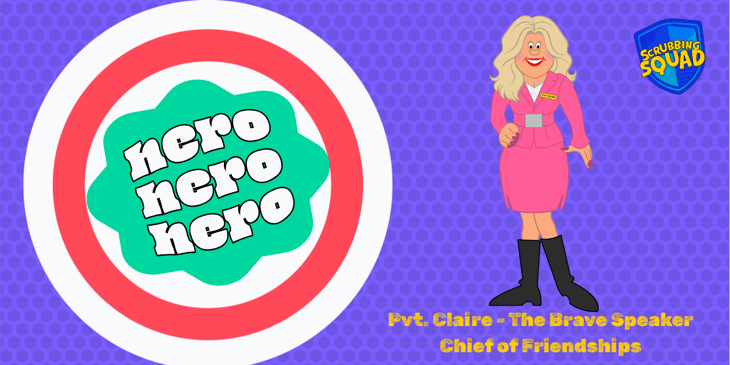
This is Pvt. Claire's mandate. She's our Chief of Inclusion and Communications. Swedish. Former marketing executive who built "perfect" global campaigns that were visually stunning and completely inaccessible to children with learning disabilities. Her rock bottom moment came when a massive public backlash taught her that a beautiful message nobody can access is just expensive wallpaper.
Her transformation: from superficial polish to Radical Inclusion. Her philosophy, hard-coded into every product she touches: "If it isn't accessible to everyone, it isn't finished."
Claire doesn't add inclusion to our content. She architects it into the foundation.
How the Mirrors work:
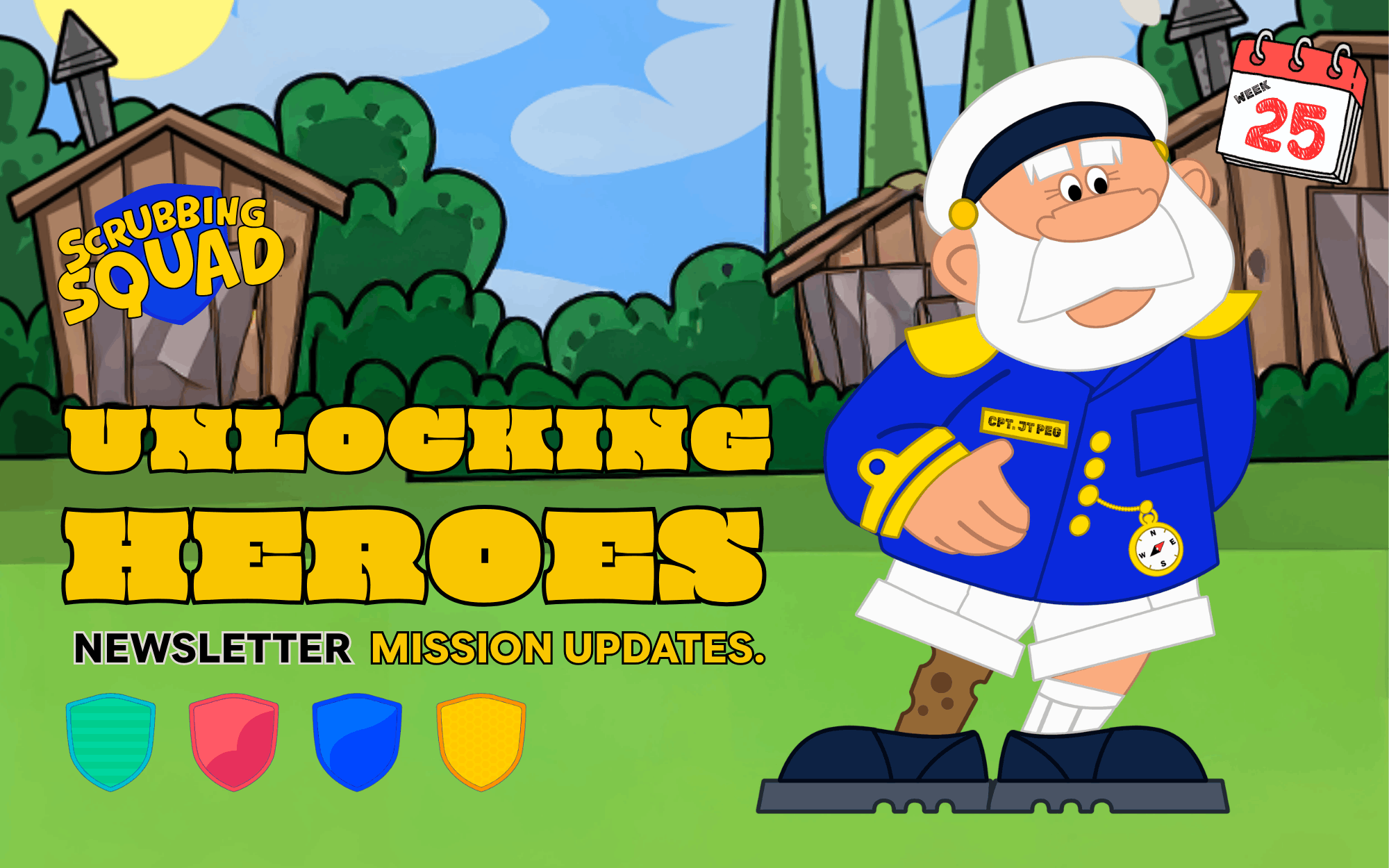
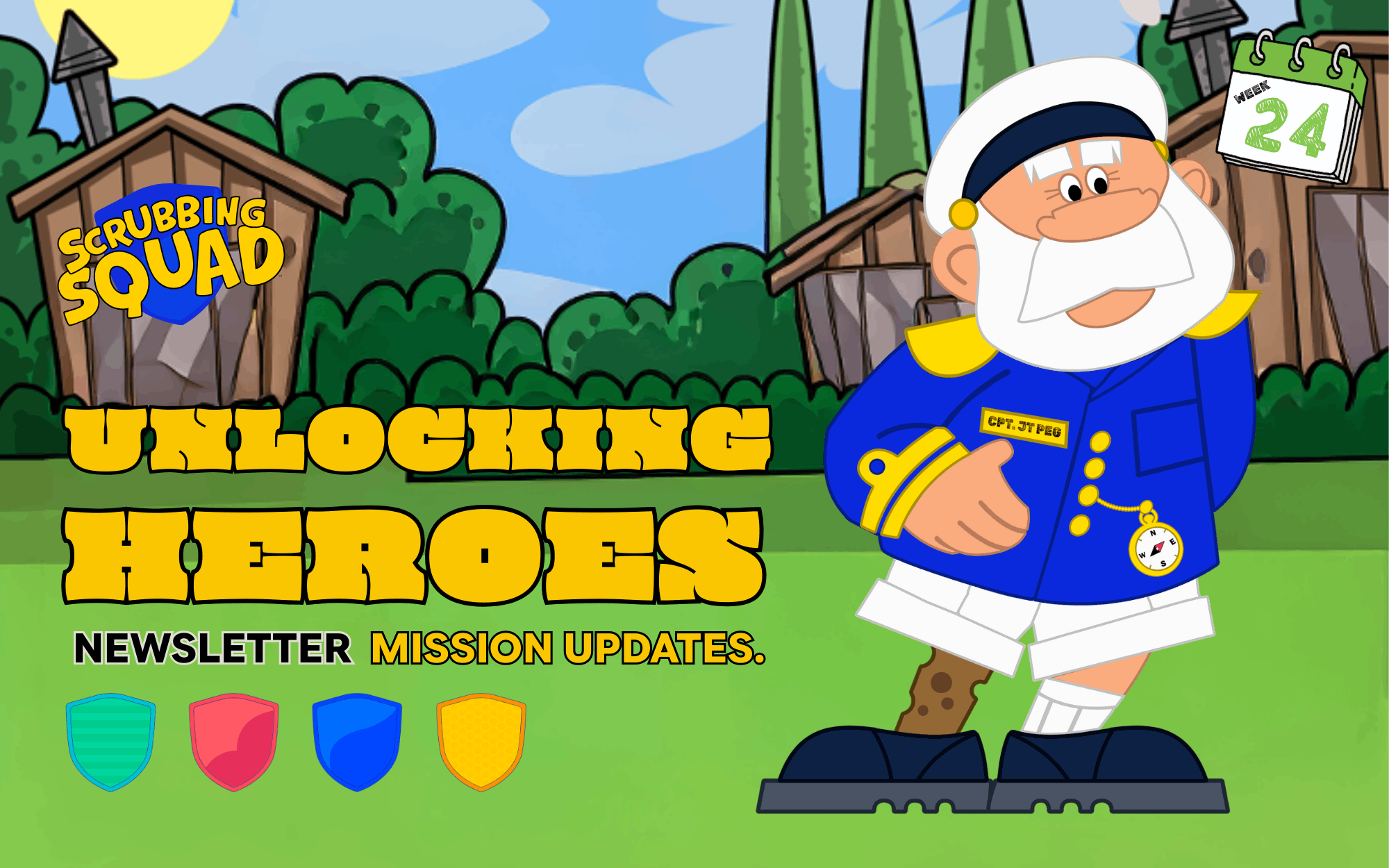
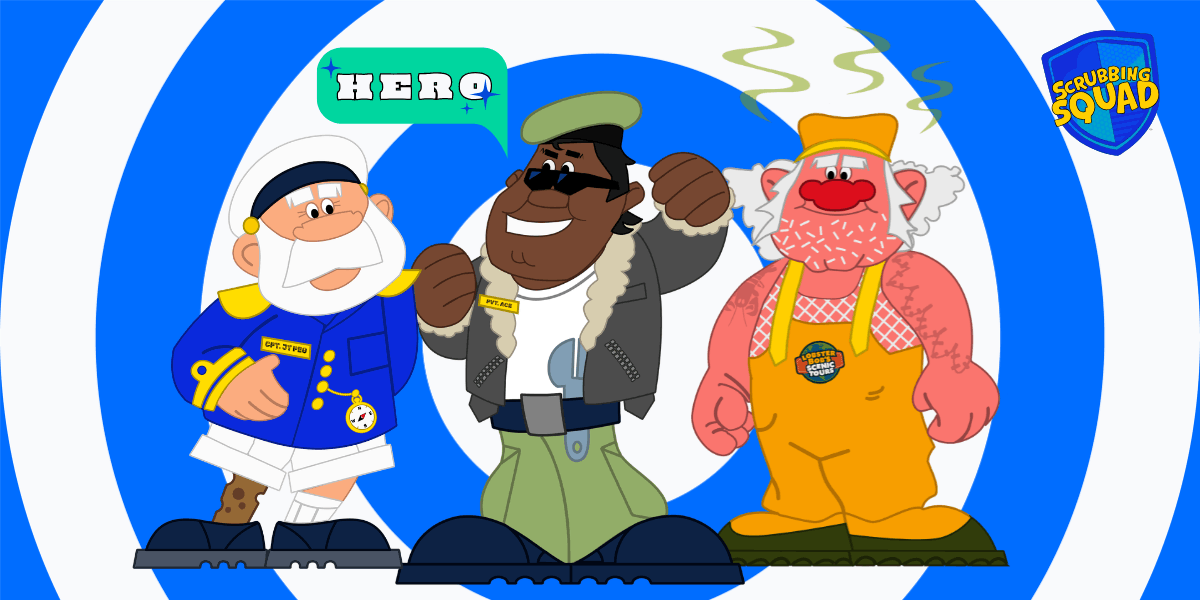
Captain JT Peg doesn't "overcome" his wooden leg. His physical difference is reframed as a modular, functional advantage. He's the Mirror for Jabari, a hero whose body works differently and whose difference is operational, not ornamental. When Jabari sees JT Peg, he doesn't see inspiration. He sees recognition.
Pvt. Ace's mission structure uses visual sequencing, clear objectives, and sensory-friendly feedback loops. He's the Mirror for Sophie, a hero whose world is built the way her brain actually works, not the way neurotypical designers assume it should.
Ama's storytelling tradition is reflected in Lobster Bob's narrative framework and Pvt. Sands' socioeconomic protocols, characters who value community wisdom, oral tradition, and resource stewardship as genuine expertise, not "developing world" novelty.
How the Windows work:
When Sophie completes a mission alongside Pvt. Sands, she's looking through a Window into Ama's world, learning about community cooperation and resource-sharing in a context she's never experienced. When Jabari follows a Captain JT Peg safety protocol, he's also looking through a Window into Sophie's sensory experience, learning that "different" brains need different environments. The characters create cross-cultural, cross-ability empathy without ever making it feel like a lesson.
And critically, because we know you're thinking it, none of this is locked behind a paywall that excludes the children who need it most. The Poverty Lock ensures that the same hardware, the same curriculum, and the same Mirrors reach Ama in rural Ghana at the same quality as Sophie in Leeds. Identical. Not a "lite" version. Not a charity donation. A structural mandate.
For Schools and Institutions
If you're a SENCO, a Trust Leader, or a Diversity & Inclusion Officer, here's your audit question: Can your current EdTech platform prove, with data - that its "inclusive" content is actually reaching and serving your most underrepresented pupils?
Not "we have diverse characters." Not "our content is available in multiple languages." Can you prove that the autistic child in Year 3 is having a fundamentally different, neurologically appropriate experience from the neurotypical child in Year 5? Can you show Ofsted that your representation strategy has measurable developmental outcomes, not just a diverse character roster?
Most platforms can't. Because they built one pipeline and decorated it.
Our Sovereign Brain stays local on the child's own device. It adapts in real time, adjusting the verification bar for children with physical or cognitive differences, ensuring that effort is measured against the child's own baseline, not a generic average. The Evidence of Effort it generates isn't an engagement score. It's forensic, individualised proof that this specific child mastered this specific milestone in a way that was appropriate for their specific neurology, culture, and circumstances.
That's not a diversity policy. That's an Administrative Shield. Audit-ready. Ofsted-proof. And it works offline.
The Bottom Line
Your child is searching. Every time they open an app, turn on a show, or pick up a book, they're looking for a Mirror. And every child sitting next to them deserves a Window.
For thirty-five years, the children's media industry has cited the Mirrors and Windows framework in conference presentations and then gone back to building one-size-fits-all content with a diversity sticker on the box.
We didn't build a sticker. We built forty-six starting points, a character roster that spans six continents and every major inclusion dimension, and a business model that guarantees the child who most needs the Mirror can actually access it.
Representation isn't a feature. It's the architecture.
And if it isn't accessible to everyone, it isn't finished.
Building for 10 million heroes.
#HeroesStartHere
Join the hero community: Sign up at scrubbingsquad.com and be the first to get exclusive access for your Heroes.