


Open the drawer. Go on. The one under the television. Or the basket in the corner. Or the cupboard you stopped opening because it makes you feel guilty.
Count the toys. The ones with batteries that ran out. The ones with apps that got deleted. The ones that were used for eleven minutes on Christmas morning and haven't been touched since February. The "educational" tablet game that taught your child nothing except how to ask for more screen time. The craft kit with seven missing pieces. The subscription box that arrived, got opened, got half-completed, and now sits in a pile next to four other half-completed subscription boxes.
How much did that drawer cost you? Two hundred pounds? Three?
And has your child brushed their teeth without a fight this morning? Packed their own bag? Managed a single transition without melting down?
You didn't buy wrong because you're a bad parent. You bought wrong because the entire market is selling you the wrong category.
The Toy Market Is Booming. Your Child's Routine Is Not.
Here's what's happening in the UK toy market right now.
Toys sold for less than £15 accounted for nearly half of the UK market last year, as pressure from the rising cost of living continued to bear down on consumers. Sales of toys and games were down 3.7% by value on the previous year, according to industry analysts Circana
Parents are spending less per item. Buying cheaper. Cutting back. The market is shrinking in value while still churning out billions of units of plastic that end up in that drawer.
But here's the twist. While the traditional toy market contracts, the educational toy market is surging. The global STEM toys market was estimated at USD 6.5 billion in 2025 and is expected to reach USD 13.8 billion by 2034, growing at 8.8% annually.
Mordor Intelligence reports that 65% of urban parents in North America and Europe now prioritise educational toys, especially those enhancing problem-solving and cognitive skills.
Parents are not spending less on their children. They are spending differently. The money is moving. Away from entertainment. Towards infrastructure.
The industry just hasn't noticed. Or it has, and it's slapping "educational" labels on the same plastic and hoping you won't spot the difference.
The Defensive Investment Shift
We call it "Defensive Investment."
In 2026, the parent buying a product for their child is not browsing for fun. They are auditing for function. They are asking a question that the toy industry has never had to answer before: "What does this actually do for my child when the novelty wears off?"
This isn't a hunch. The data is forensic.
Research by Richards, Putnick & Bornstein (2020), published in the Journal of Applied Developmental Psychology, found that parents increasingly evaluate toy purchases based on developmental benefit, not entertainment value. The study documented a measurable shift in parental buying criteria towards cognitive, motor, and social skill outcomes, with parents actively seeking information about developmental appropriateness before purchase.
And the 2025 UK market data from Circana confirms the behavioural shift. What has changed is not the desire for physical toys, but how buyers evaluate them. Parents are more deliberate. They look for longevity, developmental value, and replayability. Gift buyers increasingly want reassurance that a toy will be used, not abandoned after a week.
The 2026 parent is not a consumer. They are a procurement officer. And the product they are procuring is not a toy. It is "Developmental Insurance."
A product that helps their child manage a morning routine is not discretionary spending. It is infrastructure. A product that teaches emotional regulation is not entertainment. It is a clinical tool. A product that gets their child off a screen and into the physical world is not a toy. It is a survival mechanism.
The parent making this shift does not know they are making it. They just know that the drawer full of abandoned toys feels like a waste. And they are done wasting.
Take Liam. Take Rohan.
Liam is nine. London. ADHD. His executive function, the ability to plan, sequence, and initiate tasks, runs on reduced bandwidth. Every morning is a negotiation. Shoes. Bag. Coat. Teeth. In what order? At what time? With how many reminders?
Liam's parents have bought him toys. Lots of them. Stimulating toys. Engaging toys. Toys designed to capture his attention. And every single one of them did exactly that. Captured his attention. Held it. Refused to let go. Made the transition from play to task even harder than it already was.
What Liam's parents needed was not a better toy. It was a better system. A physical tool that structures his morning into a sequence he can see, touch, and complete. Not stimulation. Structure.
Now take Rohan. Seven. Uses AAC (augmentative and alternative communication). His parents have been sold "communication toys" that feature buttons, sounds, and lights. Entertainment dressed as therapy. What Rohan actually needs is a functional communication tool that integrates into his daily routine and logs real usage data, not a plastic box that makes animal noises when you press the cow.
Both children have drawers full of toys. Neither child has an infrastructure that works.
Why the Market Can't Fix This
The traditional toy market operates on a simple model: novelty, impulse, replacement. Design something bright. Sell it at Christmas. Replace it by Easter. The entire revenue model depends on the product being abandoned, because abandonment creates the next purchase.
This is the "Landfill Cycle." And it is the opposite of what parents now want.
The 2026 parent has figured out what the industry hoped they wouldn't: that a product designed to be abandoned is a product designed to extract money, not deliver value. And they are rejecting it. Not loudly. Not through boycotts. Through the quiet, devastating act of simply buying fewer of them.
The Circana data proves it. UK toy sales slipped 3.7 per cent to £3.4 billion in 2024, yet lower-priced items performed robustly, with 80 per cent of all toys sold costing under £15. Parents are still buying. But they are buying cheap disposables for impulse moments and withholding serious spend. They are waiting. Looking for something that justifies the investment.
The problem is that the market is offering them two options: cheap disposable plastic, or expensive disposable plastic with a "STEM" sticker on it. Neither option solves the morning routine. Neither option helps Liam get dressed. Neither option gives Rohan a communication tool he can actually use at breakfast.
The market has a product gap the size of a generation. And the generation is waiting.
The Squad Solution: Infrastructure, Not Entertainment
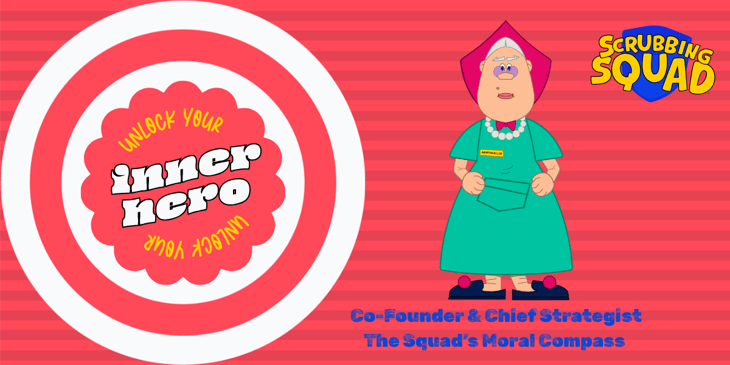
This is why Auntie Ellie built the Common Sense Kit.
Auntie Ellie is our Chief Strategist. British. Daughter of a diplomat. Spent years teaching children in refugee camps across Southeast Asia, where she learned the hardest lesson of her career: a beautiful curriculum is worthless if the child needs to fetch water during homework hours. A perfect kit that nobody can carry is not a kit. It's vanity.
Her philosophy is the foundation of every product we build: "If it's too complicated, it's wrong. Simplify, hero."
The Squad does not sell toys. We sell Mission Vessels. Physical infrastructure, embedded with NFC technology, that connects to our digital curriculum and becomes part of the child's daily routine. Not for eleven minutes on Christmas morning. For seven years.
The Squad Access Key is not a toy. It is a physical authentication card, the size of a bank card, that a child taps every morning to "Clock In" to their routine. It is the ritual anchor. The thing that signals: the day has started. The mission is live.
The SOP Cards are not flashcards. They are Standard Operating Procedure cards, step by step mission instructions for getting dressed, brushing teeth, packing a bag. Liam's executive function doesn't need stimulation. It needs externalisation. The SOP Cards take the sequence out of his head and put it in his hands.
The Hero Readiness Vest is not a costume. It is a weighted, tagless, flat-seamed sensory regulation wearable that helps a child's nervous system settle before the day begins. Rohan puts it on. His body calms. The routine starts.
The Common Sense Kit is Auntie Ellie's flagship. A practical, durable, no-nonsense bundle of the tools a child actually needs to manage their own day. Not pretty. Not flashy. Functional. Heirloom quality. Designed to be used until it's worn out, not until it's boring.
Every one of these products generates Evidence of Effort data. Not engagement metrics. Not session duration. Verified proof that the child completed a physical task in the real world. Teeth brushed. Bag packed. Vest on. Mission complete.
That is infrastructure. And it doesn't end up in the drawer.
For Schools and Institutions
If you're a Head Teacher or a procurement lead, here's the audit question: Are you purchasing products that your pupils use for one term and abandon, or products that embed into their daily routine for years?
The "Landfill Cycle" runs through schools too. Interactive whiteboards gathering dust. App licences unused after the first half term. STEM kits with missing components by October.
Our Sovereign Rail architecture means that the physical hardware, the tools your children hold, works offline, requires no device dependency, and generates Ofsted ready developmental data from day one. The Evidence of Effort ledger doesn't expire. It compounds. Every term, every year, the data set grows. That is not a procurement cost. It is an institutional investment with a seven-year return.
And the Poverty Lock ensures that the infrastructure reaches every child in your cohort at identical quality. Not a "school edition." Not a stripped version. The same kit. Because infrastructure that excludes is not infrastructure. It is decoration with a purchase order.
The Bottom Line
The drawer is full. The routine is broken. The market sold you entertainment when you needed infrastructure. And now it's wondering why you stopped buying.
The 2026 parent is done with the Landfill Cycle. They want tools that last. Products that function. Systems that help their child get through a Tuesday morning without tears, without negotiations, without seventeen reminders to put their shoes on.
We didn't build a toy. We built the operating system for the household routine. Physical hardware. Digital curriculum. Evidence that it works. Infrastructure that compounds in value the longer you use it.
Your child doesn't need another thing in the drawer. They need a system that gets them out the door.
Building for 10 million heroes.
Heroes Start Here
Join the hero community: Sign up at scrubbingsquad.com and be the first to get exclusive access for your Heroes.



.png)