











.png)
Petra. The Afterwards Is Not the Same as the Moment.
The Destination
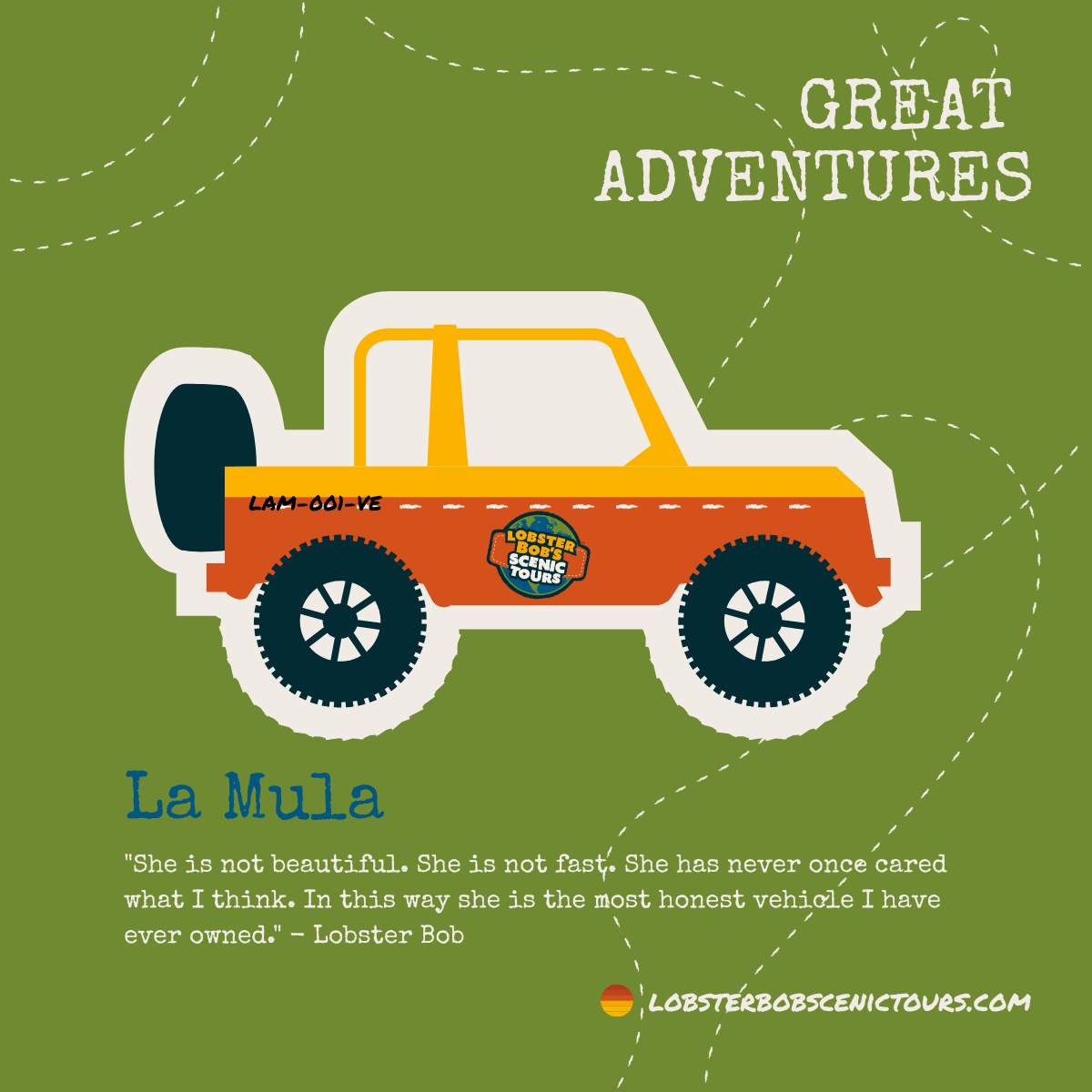
This edition returns to Asia. Lobster Bob is at Petra, the rose-red city the Nabataean people carved from sandstone in the deserts of southern Jordan. The track is Land. The type is Landmark. This is the second Asia destination in the Postcards canon. The vehicle is La Mula LAM-001-VE, the truck Lobster Bob has driven across six continents. She handled the desert road in without comment. She is used to deserts.
Petra was built two thousand years ago by a trading civilisation that ran the caravan routes between Arabia and the Mediterranean. They were extraordinarily wealthy, extraordinarily organised, and at some point in the third century they were gone. The city stayed.
What follows is the postcard from the morning Lobster Bob walked into the Siq.

Hola Mijo! Lobster Bob here...
I parked La Mula at the visitor centre at half past five in the morning. The desert was cold. La Mula did not require an explanation for why we were starting at this hour. She has done many early starts. She did not comment.
The Siq is a kilometre-long canyon that leads to the city of Petra. It is the only way in and the only way out by the route the Nabataeans used. The walls rise eighty metres above the path on both sides. The path itself is narrow enough in places that two people walking abreast feel the canyon noticing them.
I walked it alone. The sun was not yet over the rim. The canyon was lit from above in a thin strip of orange light that did not reach the path. My footsteps made the only sound. The rock had been here for hundreds of millions of years. It was patient about my arrival.
The Siq does not show you the Treasury until you are around the final corner. The Nabataeans knew exactly what they were doing when they chose this approach. The canyon narrows. The light gets thinner. You can hear yourself breathing. Then you turn one last bend. The canyon walls part on a building that has been waiting there in absolute stillness for two thousand years.
The Treasury is forty metres tall. It was carved directly into the sandstone cliff face. There are no joints. There are no blocks. The whole facade is one piece of rock with the building cut out of it. The Nabataeans did this from the top down. They started at the roof and worked their way to the ground. That is the only way to do it without scaffolding falling away under you. They got it right the first time. There is no second draft of the Treasury.
I had been told what was coming. I had read the descriptions. I had seen the photographs. I still stood at the end of the Siq for a long time without doing anything useful.
The failure was small. I had thought I would photograph the moment. I had set up the camera. I had walked the Siq with the camera in my hand. When I turned the corner I forgot the camera existed for about ninety seconds. By the time I remembered it, the moment had already happened. I have the photograph I took afterwards. The afterwards is not the same as the moment.
Cpt. JT Peg has not been to Petra. He has heard me describe it twice. He has the better grasp of it. He listens. I keep trying to describe it. He has stopped asking.
The school-yard fact is this. The Nabataeans built Petra two thousand years ago. They were extraordinarily good at building things, trading things, and finding water in deserts. By the year 363 their city had been weakened by earthquakes and by the trade routes moving elsewhere. The Nabataeans themselves stopped being a separate people not long after. Petra was forgotten by Europe for over a thousand years. A Swiss explorer named Johann Burckhardt rediscovered it in 1812 by asking the local Bedouin where it was. The Bedouin knew. They had not forgotten.
A child can hold that on their fingers tonight. The city was not lost. The Bedouin had it the whole time.
I walked the rest of the city after the Treasury. There are more than eight hundred carved monuments at Petra, most of them tombs cut into the cliffs. The High Place of Sacrifice is a flat altar at the top of a steep climb. I made the climb because it seemed wrong not to. The view from the top was what I would have expected if I had been able to expect anything that morning.
La Mula was where I had left her. She had not moved. She had not been about to.
We drove back to Wadi Musa at last light. La Mula handled the dust road at her own pace. I logged the camera failure. I logged that my last two descriptions of the Treasury to JT had been out of order.
The Treasury is still there. So are the Bedouin. So is the question of who the Nabataeans were before they ran out of road.
The World is Your Classroom. Humility is Your Compass. Passport ready, mijo? The world is not going to wait forever.
Lobster Bob, Founder & Scenic Tour Operator
Three Ways to Travel With Us
528 DESTINATIONS. ONE GUIDE.Your child is the missing passenger. Join the waitlist and travel with Lobster Bob before the first tour opens.scrubbingsquad.com



Building for 10 million heroes.
Heroes Start Here
Join the hero community: Sign up at scrubbingsquad.com and be the first to get exclusive access for your Heroes.