











How Real Missions Work
The Wednesday Afternoon Standoff
It is half past four on a Wednesday afternoon. A child is on the sofa with a phone. A parent is in the kitchen with a list. The list says homework, teeth, bath, pack bag, dinner, bed.
- The parent has tried "Five more minutes."
- The parent has tried "Right, that is enough."
- The parent has tried "Please, I am asking you nicely."
The child has tried not hearing any of it. The phone is loud, bright, and infinite. The list is quiet, dull, and finite. The phone is winning.
This is the standoff. Most evenings in most homes, in some version, this is the standoff.
The Scrubbing Squad replaces the standoff with a mission. This week's newsletter is about what that actually looks like. Not the theory. The mechanics.
What a Mission Actually Is
A mission, in our world, is a real-world task with four parts.
- The child gets a briefing.
- The child does the task in the real world.
- The system records the effort.
- The screen ejects.
That is the whole structure. Briefing. Real-world task. Verification. Exit.
It is not a video to watch. It is not a quiz to swipe through. It is not a streak to maintain. It is a thing to go and do, with a piece of kit in the child's hand and a record of the result that exists when the doing is done.
Every mission belongs to one of the four pillars. Each pillar has its tactical name. Education is Code-Breaking. Health is Scout Reconnaissance. Hygiene is Battle Prep. Safety is Hero Protocol. Each pillar has a camp. Discovery Camp. Recharge Camp. Refresh Camp. Guardian Camp.
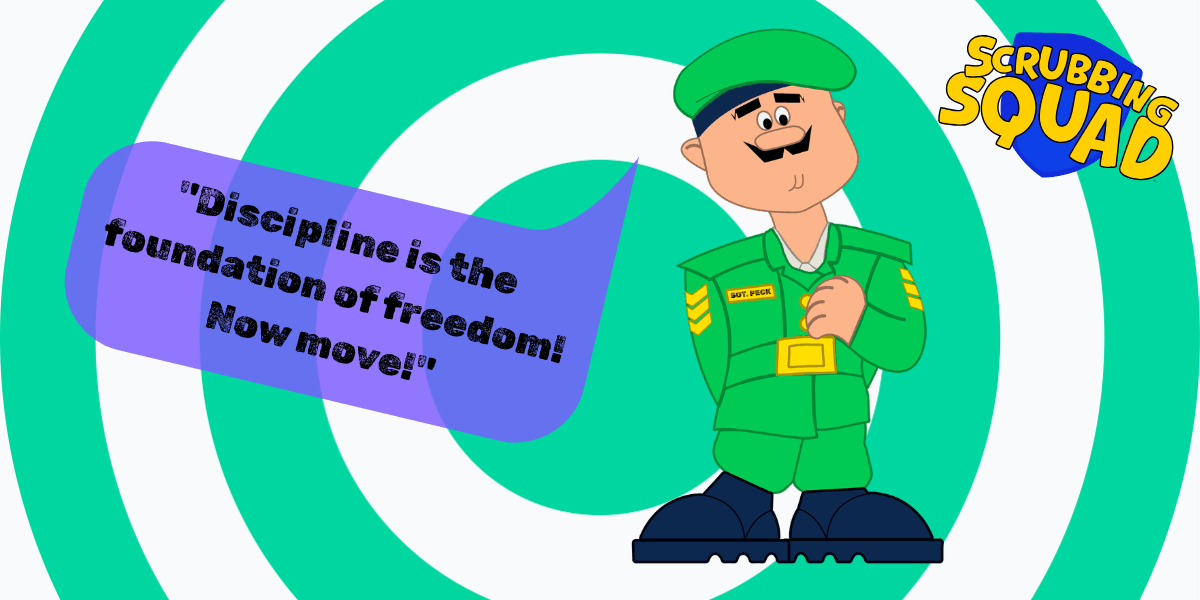
Sgt. Peck runs Mission Training across all four. Every mission, regardless of pillar, runs through him.
The Evidence: The Physical Half Is Where Learning Lands
What follows are four real missions. One per pillar. Each one is in the live mission library. None of them are invented for this newsletter.
Take Grandpa John
Education: Discovery Mission. Read One Chapter.
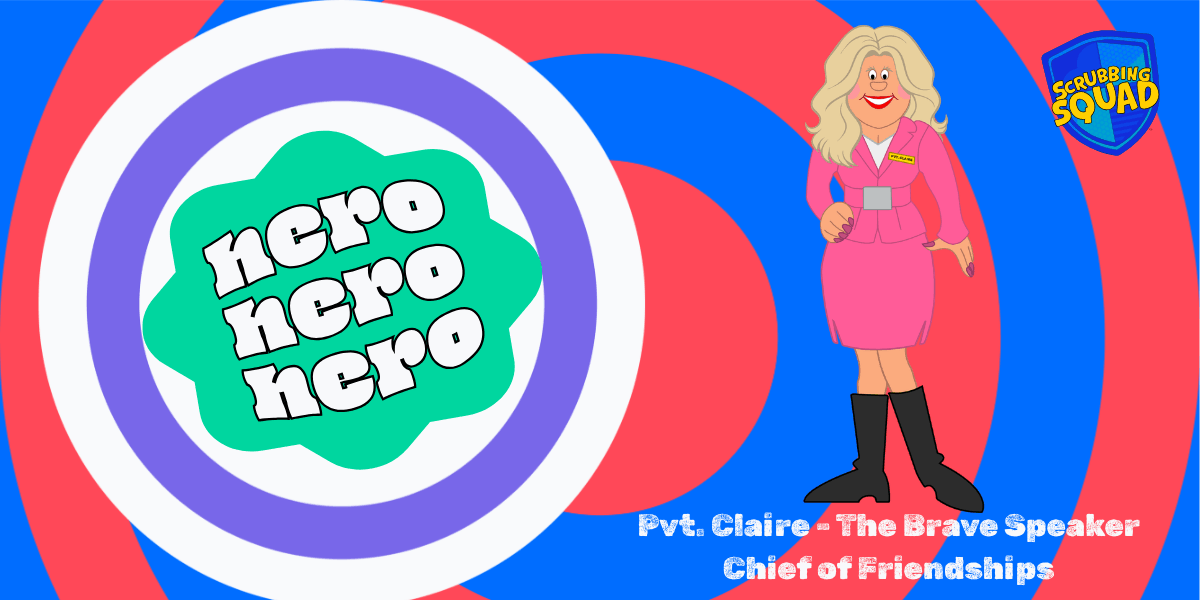
Pvt. Claire delivers this one. She is our Chief of Friendships, Swedish, and she leads the Education side of Discovery Camp under Sgt. Peck.
The briefing is short. One chapter. The child's choice of book. The mission is not "read for thirty minutes," because thirty minutes is a clock metric, not a hero metric. The mission is one chapter, because a chapter has a beginning, a middle, and an end. It finishes when the chapter finishes.
The child reads. The book closes. The child taps the SOP Card for "Chapter Complete" against the phone. The system logs the time, the book title, and the date. The screen ejects.
A real-world task. A clean exit. A record that exists.
Pvt. Claire's voice is the only thing on the screen at the start of this mission. The child is the only thing in the room at the middle of it. The record is the only thing in the system at the end of it.
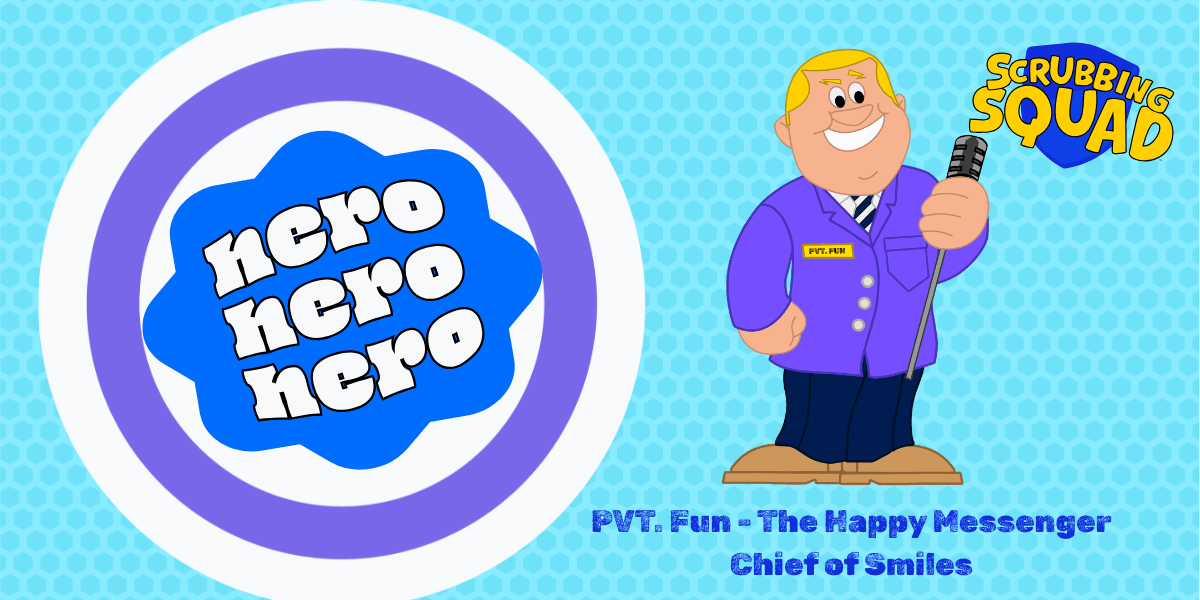
Health: Recharge Mission. Feelings Finder. Name It to Tame It.
Pvt. Fun delivers this one. She is our Chief of Smiles, Canadian, and she leads Emotional Wellbeing in Recharge Camp under Sgt. Keith.
The briefing is one sentence. Find the feeling you are carrying today and put a word to it.
The child taps the Feelings Finder card. The card has a colour wheel of feelings. The child points to one. Frustrated. Hopeful. Tired. Annoyed at little brother. The system records the feeling, the day, and the time.
There is no scoring. There is no streak. There is no graph the child is being trained to game. There is only the named feeling, logged.
Joanne, the parent who wants evidence, sees a record of her daughter's emotional vocabulary growing across a school term. That record travels with the child, into her own Sovereign Brain, into school SEND reviews if needed, into nothing at all if not needed. The record is the child's, not anyone else's.
Naming a feeling is a real act in the real world. Recording it is the verification. The screen ejects. The child goes and finds her little brother and tells him she was annoyed and is sorry.
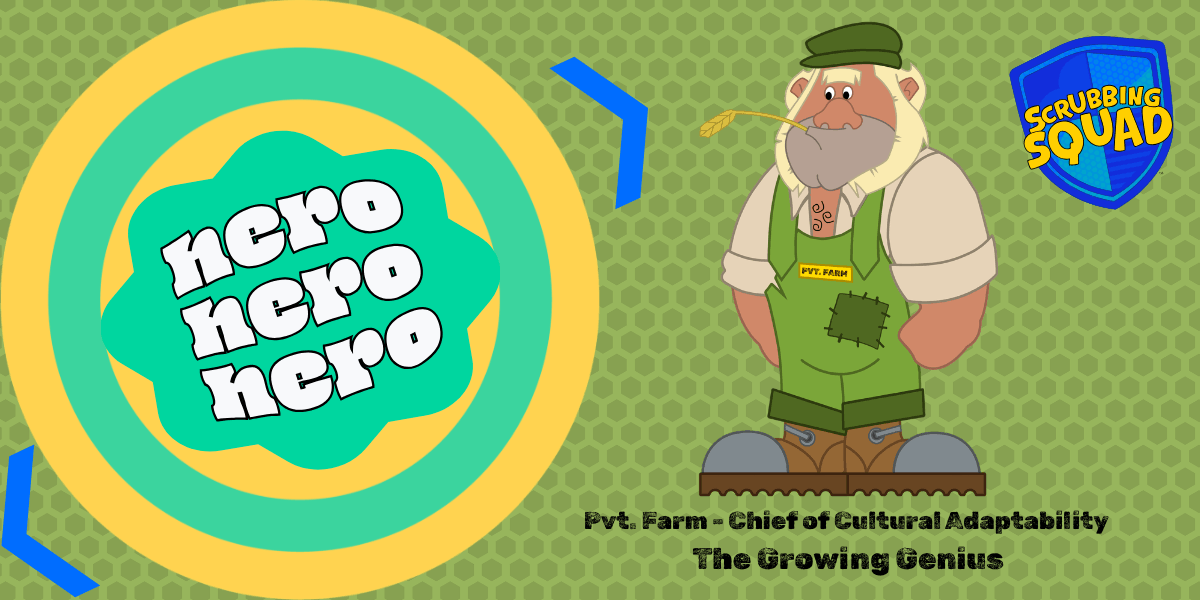
Hygiene: Refresh Mission. Cultural Heritage Mission. Cook One Recipe.
Pvt. Farm delivers this one. He is our Chief of Cultural Adaptability, South African, and he sits inside Refresh Camp under Sgt. Rose.
The briefing is two sentences. Cook one recipe from your family heritage. Show a grown-up at the end.
The child gets a grown-up. The grown-up is part of the mission, not an obstacle to it. The recipe is the child's family's recipe, not a stock recipe pulled from a content library. A roti. A patacón. A Friday-night chicken from a grandmother's drawer of yellowed notebooks.
Hygiene, for us, is not just teeth and hands. Hygiene is the dignity of how a body is kept and how a body is fed. Cultural hygiene traditions are baseline references in our content, not bolt-ons. Pvt. Farm carries that brief.
The cooking happens. The grown-up signs off with a tap. The system logs the recipe, the date, and the named tradition. The screen ejects. The child eats the meal they cooked.
Anika, the parent translating her household's heritage into her child's routine every single day on her own, just had a Tuesday taken off her list. Her daughter cooked the recipe she would have cooked anyway. This time the platform recognised it as a mission.
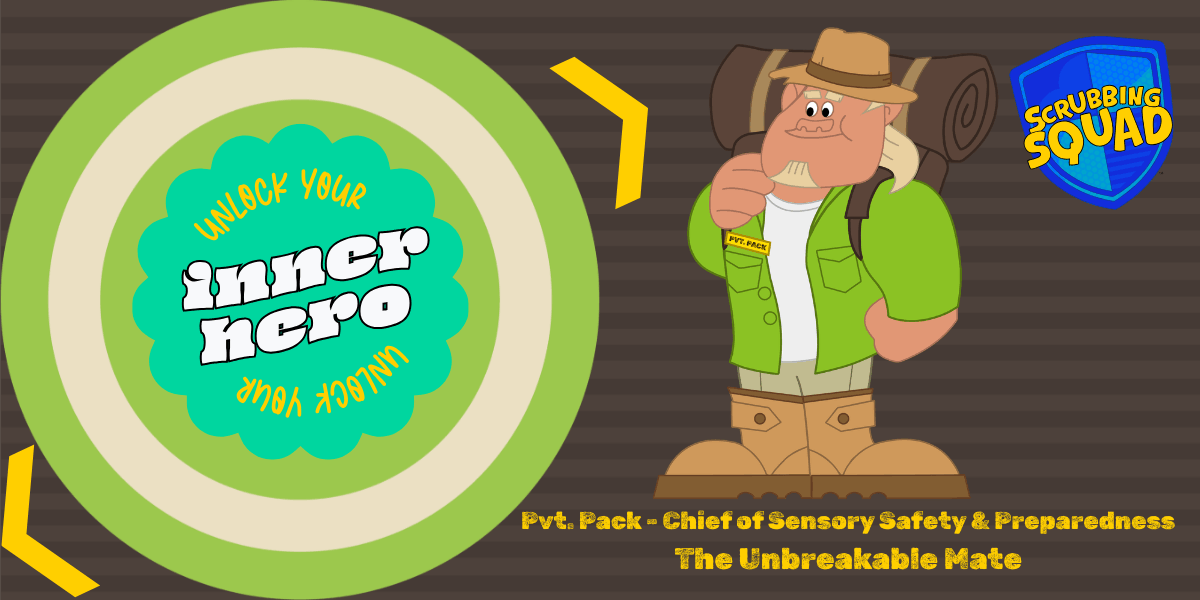
Safety: Guardian Mission. Safety Pack Check. Is Your Kit Ready.
Pvt. Pack delivers this one. She is our Chief of Emergency Preparedness, Australian, and she sits inside Guardian Camp under Cpt. JT Peg.
The briefing is a list. Torch. Whistle. Plaster pack. Water bottle. House key on lanyard. Phone number written on paper, in case the phone is dead.
The child checks the kit. Each item gets a tap against the SOP Card. The system logs the date of the last full check. The next prompt is set six weeks out, not because of an algorithm, because that is how often a safety kit should be checked.
For Emma, whose child has specific needs, the kit includes whatever her child needs that another child's kit might not. Inhaler. Medical alert card. Spare ear defenders. The mission adapts. The verification does not.
For Joanne, the institutional navigator, the kit check is the kind of evidence that schools, GPs, and SENCOs respect because it is verified and timestamped, not anecdotal.
The kit gets checked. The screen ejects. The child goes outside knowing they are ready.
Why Real Effort. Why Verified Victory.
The four examples above share one architecture. The child does a real thing. The system records that they did it. The screen leaves the room.
That is the entire promise. Three sentences.
Most children's apps reverse it. The child stays on the screen. The screen records that they stayed on it. The real world is what the screen says it is.
We built the opposite. The screen is the briefing room and the records office. Everything that matters happens between those two moments, off the screen, in the kitchen, in the bedroom, in the garden, at the door, with the cooking, with the kit, with the chapter, with the named feeling.
That is what we mean by Evidence of Effort. Not a score. A record. The record exists because the effort existed. The effort existed because the mission was something a child could actually go and do.
What This Means for Sarah
Take Sarah, the parent on the kitchen side of the Wednesday afternoon standoff. The Squad does not give her a new tool to police her child with. It gives her a child who has been briefed by Sgt. Peck, deployed by Pvt. Claire, and logged by the system. Sarah does not have to ask three times. The mission has its own start and end.
Sarah gets her evening back. The list still exists, but the list has a sergeant now.
What This Means for Joanne
Take Joanne, the parent who reads the safeguarding policy before she signs the trip slip. The Squad does not ask her to take the platform on faith. Every mission produces a timestamped, named, verified record. That record is hers, on her child's Sovereign Brain. It travels into a SEND review if needed. It stays private if not. It is evidence, not anecdote.
Joanne wanted a platform that worked inside the system she has to navigate. The system she navigates runs on records. Ours produces them.
The Bottom Line
The standoff on the Wednesday afternoon sofa is the wrong fight. The phone always wins that fight, because the phone is built to. Asking a parent to win it on willpower is a system failure dressed up as a parenting tip.
We did not write a better tip. We built a different system.
A mission is a real-world task with four parts. Briefing. Task. Verification. Exit. Four pillars. Four camps. One sergeant who runs training across all of them.
That is what is waiting inside the platform. Not content. Missions. Real ones. Already written. Already in the library. Pre-launch and growing every week.
And we're building it for 10 million heroes. Heroes Start Here Join the Waitlist
Join the hero community: Sign up at scrubbingsquad.com and be the first to get exclusive access for your Heroes.