










We Launched a Merch Store Before We Launched an App
A store before an app looks like the wrong way round.
A software company sells software. The app comes first. The hoodie and the sticker come later, once there is something to be a fan of.
We did it the other way. The store opened before the app.
To a lot of people that looks like a founder who got distracted. A side hustle. A gift shop with no museum attached.
It was none of those things. It was the most deliberate decision in the build.
The physical products are not merchandise. They are one half of the system. We built that half first, on purpose, and this is why.
You Have Bought the Tie-In Before
You know the merch that comes after.
The film does well, so a plastic figure appears. The show gets a second series, so the pyjamas arrive. The merchandise is an afterthought. A way to squeeze a little more from a thing that already exists.
Your child wants it for a fortnight. The figure loses an arm. The pyjamas go grey in the wash. The thing meant nothing because it did nothing. It was a logo printed on an object.
That is tie-in merch. It is the last step in someone else's process. We refused to make it.
The Object Is Not Optional
The word that explains the order is phygital. Physical and digital, joined by design.
The screen is only half of the Scrubbing Squad. The other half is real objects a child holds, taps, and keeps.
Here is how the two halves meet. A child taps a physical product to a phone. The chip sends a signal in under 400 milliseconds. The app logs the effort, then ends the session and sends the child back to the real world.
We call that principle Atoms Unlock Bits. The digital reward is earned by physical action, never by sitting still and tapping. The object is not decoration on top of the app. The object is the key that switches the app on.
So if we cannot make a physical thing worth owning, the whole model fails before a line of app code matters. We had to prove the physical half first. There was no honest way to do it second.
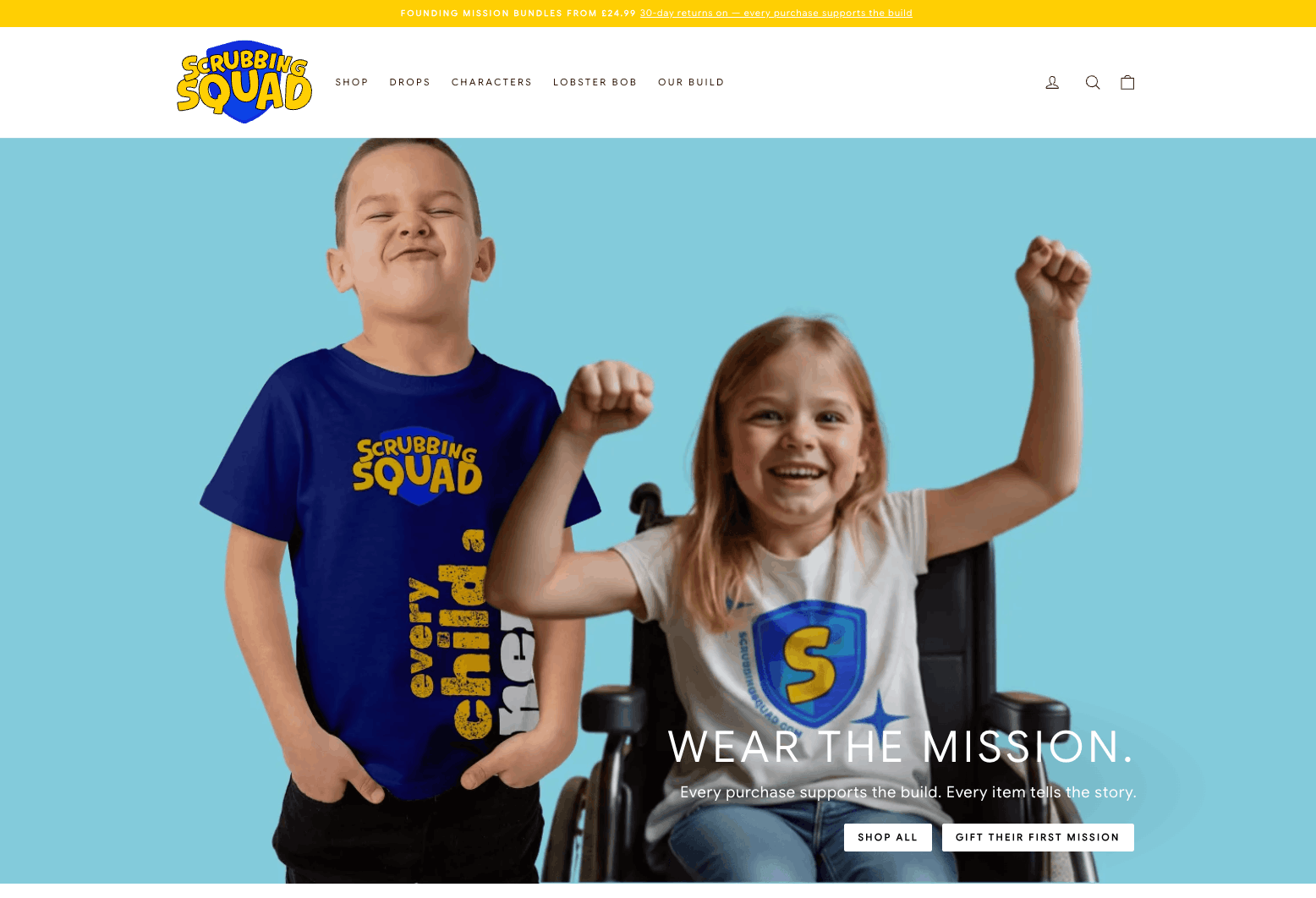
The Evidence: The Physical Half Is Where Learning Lands
This is not a romantic idea about real toys. It is documented child development.
Researchers call it embodied cognition. The principle that children think and learn through physical action, not only through what they see on a screen.
A 2023 study by Gilligan-Lee and colleagues, published in the journal Child Development, tested it directly. They trained 182 children, average age eight, in spatial skills. One group used physical objects they could handle. One group did the same training on screen, without the objects.
Both groups improved. But the children who handled the physical objects showed larger and more consistent gains in maths, and deeper processing, than the screen-only group.
The hands mattered. The object in the hand did something the screen alone could not.
That is the science under a phygital system. The physical half is not the gift shop. It is where the learning lands. Building it first was not vanity. It was building the part that does the work.
Take Grandpa John
Grandpa John is a grandparent who wants to stay relevant. He is the Silver Gifter.
He wants to give a gift that means something. He wants the moment a grandchild looks up and says that was brilliant.
He is not going to manage an app subscription. That is not the relationship he wants with technology, or with his grandchild.
A physical object is made for John. Something real he can wrap. Something a child opens with their hands. Something that carries the Squad into the home without a screen in sight.
The store gives John a way in that an app never could. He starts with the object. The mission follows. The order respects how John actually loves his grandchild.
And every piece is character-led, not product-led. John is not buying a tee with a logo on it. He is giving his grandchild the gear a founding crew member carries.
The Squad Solution: The Smaller Yes, and the Founding Artefact
Trust is not won in one large request. It is won in a sequence of smaller ones.
Before we ask a parent for the big yes, letting us into their child's daily routine, we want to earn a smaller yes first.
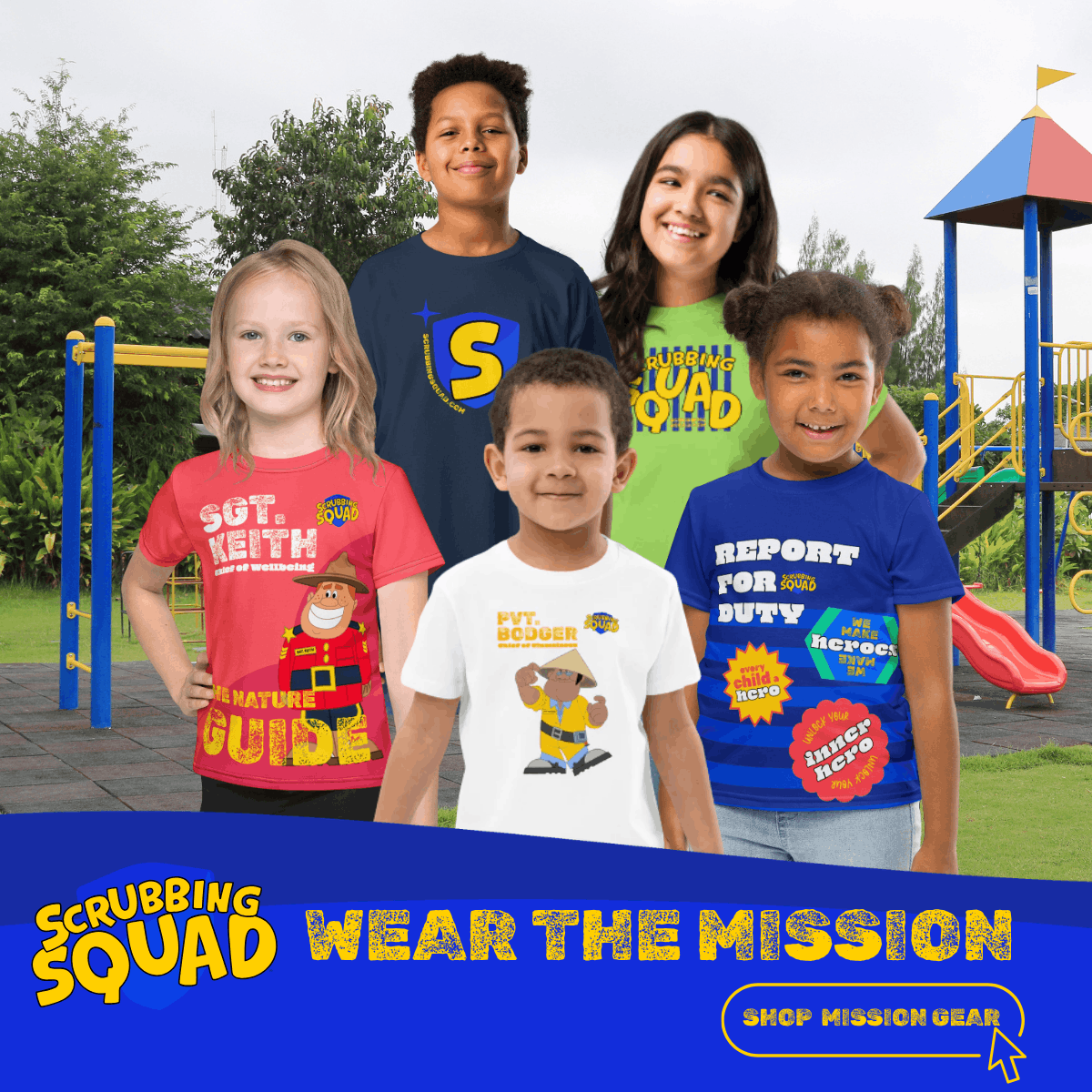
A journal worth writing in. A poster worth the wall. A tee a child chooses to wear to school. Get the small object right and you have shown your hands. You can make things with care. That is the permission a family needs before the larger ask makes sense.
The early gear is also a marker in time. Every piece bought now is a founding artefact. Not a product line. Proof that someone was here before the platform existed.
We track that with a Founding Member number, assigned at purchase. The first hundred are the founding circle, and that number is permanent. When the Mission Kits ship in 2026, the children carrying the early gear will already be founding crew. They will have been part of this from before there was an app to download.
The store also proves something quieter but just as important. We sell through our own Sovereign Rail, direct to families. The margin from a sale is not only revenue. Under the Poverty Lock, it is legally bound to fund identical kits for children who could not otherwise reach them. The Poverty Lock is not a promise or a charity line. It is built into how the company is run. Every sale carries a social one.
For Schools and Institutions
If you are a Head Teacher or a procurement lead, here is the question worth asking of any children's platform. Is the physical product built to last and to teach, or built to be replaced?
A tie-in toy is designed for a launch cycle. It is meant to be outgrown and rebought. A Mission Vessel is designed to embed in a routine and hold its value for years. The hardware works offline. The completion is logged as evidence you can use in a SEND review or a parent meeting.
For licensing and sponsorship partners, the order is the proof of seriousness. A brand that can make a physical object families choose to keep has shown manufacturing discipline and a real audience before launch. That de-risks everything that follows.
The Bottom Line
A store before an app looks like the wrong order. It was the right one, chosen on purpose.
The Scrubbing Squad is phygital. The object is not the merchandise. It is the key. If we could not make something real and worth keeping, we had no business asking for a child's routine.
So we proved the physical half first. The smaller yes before the larger one. The founding artefact before the app. The trust before the ask.
The physical came first because the trust has to come first.
And we're building it for 10 million heroes. Heroes Start Here Join the Waitlist
Join the hero community: Sign up at scrubbingsquad.com and be the first to get exclusive access for your Heroes.